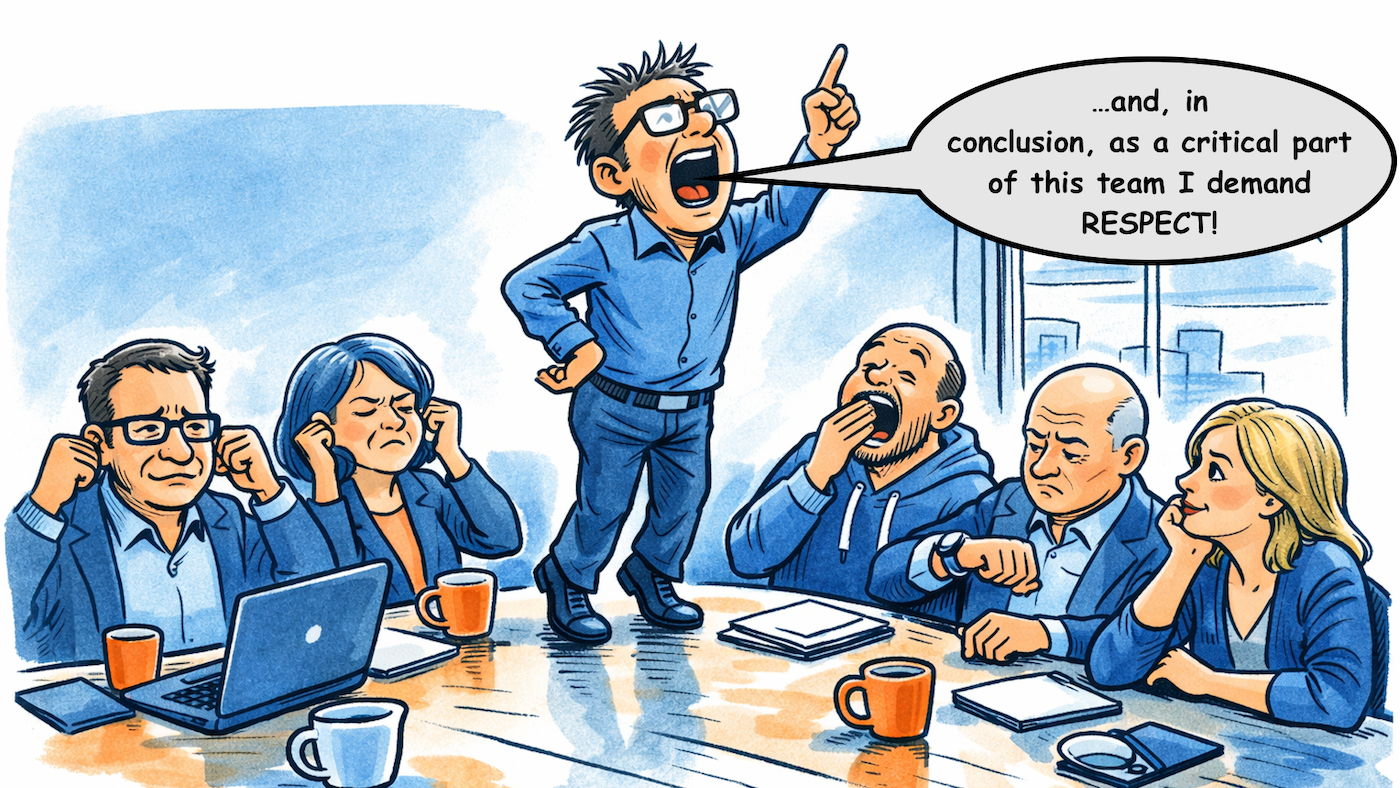

Assertive Stakeholders May Be Constructive Allies

Every large SAP project eventually produces a moment when someone in the room speaks louder, pushes harder, or refuses to accept the direction of travel. The person can be labeled a “difficult stakeholder” but that rarely helps. It distracts attention away from the forces driving that behavior and toward personality, and in complex ERP transformations, behavior reflects pressure, exposure, and power.

An SAP program redistributes control across finance, operations, IT, and sometimes across geographies. Leaders who once held local authority find themselves part of a global template discussion. Senior finance leaders sign off on redesigned controls that carry audit consequences. In that environment, raised voices and firm resistance are common.

Friction in itself does not mean a program is in trouble. Silence often tells you more. When workshops pass without challenge, it can mean that risk has not yet been revealed. When design sessions become tense, it can mean that accountability is becoming visible and stakeholders are starting to engage with the realities of the project. The task for a program leader is to recognize what conflict reveals and to build a structure that contains it.

SAP transformations involve compromise. Stakeholders respond to those pressures, and they usually do so in line with what they are responsible for protecting.

Incentives Define Behavior

If you want to understand assertiveness among stakeholders in an SAP program, start with incentives. Each senior role in an SAP project interprets decisions through the specific risks, accountabilities, and performance pressures attached to their own remit.

These responsibilities are tied to performance reviews, bonus structures, and reputation. When a design decision involves one of these domains, the intensity of interactions rises. 

Viewed through that lens, escalation becomes easier to read. For example, a request for deeper evidence around data migration quality reflects exposure to reporting risk. Or a refusal to accept a late scope addition reflects pressure around delivery predictability. A heated debate about localization reflects concern over local revenue impact.

The difficulty increases when incentives clash. In those moments, meetings can become charged, and often, what appears as stubbornness is the collision of legitimate priorities.

Identity and Authority in Transformation

Beyond formal incentives, SAP programs can disturb the identity that stakeholders carve out for themselves in SAP environments.

Authority of individuals within the organization can increase or decrease in these scenarios. People who built careers on specific knowledge, may feel as stewards of that knowledge they are losing status, and strong reactions may follow.

These reactions rarely acknowledge the issue as threats to their status. They are revealed as detailed objections to design choices, though these individuals may also have legitimate concerns about these choices and their impact.

A debate about whether a particular field is mandatory may mask anxiety about loss of control, or a prolonged argument about a custom interface may hide concern about perceived relevance. When you treat these objections purely as technical disagreement, you miss the wider context. Equally, you must not assume their objections are a mask for something else.

Recognizing identity dynamics requires awareness but also discretion. When a stakeholder pushes hard against standardization, ask what responsibility or status may be shifting. When a regional leader resists template adoption, consider what authority they stand to lose. This perspective informs how you structure the conversation, but it is best to try to have that conversation privately. 

Escalation Across Phases

The level of intensity does not remain constant throughout a project. During early discovery and business case discussion, optimism is common. Assumptions remain untested, and tension is present but muted.

Explore workshops bring the first potential for public objections. Process owners confront the practical implications of fit-to-standard decisions, and gap lists start to grow. Local requirements meet global ambitions at standardization, and identity and authority issues may also become apparent here.

The Realization phase shifts the source of tension, as integration complexity emerges, data quality problems become more obvious. The conversation moves from principles to practical risk exposure. Escalation at this stage is often due to fear of technical failure rather than disagreement over the direction of the changes.

Deploy concentrates the pressure because cutover plans convert months of preparation into a few days of action which is not easily reversible. Leaders weigh the cost of delay against the cost of instability, and emotions run high because consequences feel immediate and lasting. A stakeholder who has remained measured for months may become forceful in the final weeks before go-live as the consequences of the changes hit home.

During the Run phase the benefits are measured against forecasts and the operational teams live with the system. Questions arise about earlier decisions, and if expectations were inflated, tension can reappear in the form of retrospective scrutiny.

Understanding this curve allows you to anticipate behavior. You do not need to be surprised when workshops in Explore become heated. You do not need to interpret intense debate before cutover as a sudden breakdown. Each phase carries its own pressures and a mature SAP project expects that and prepares for it.

Governance as Behavioral Architecture

Once you accept that intensity in SAP programs reflects pressure, the conversation shifts to the structure of the project.

Behavior follows architecture. If governance is vague, that ambiguity may lead to escalation. If decision rights are blurred, authority is tested, and if the necessary compromises remain undocumented, the memory of some stakeholders becomes selective.

Every large SAP program requires a small number of firm rules. Decisions need written rationale tied to date and authority. Scope adjustments require quantified impact on time, cost, and risk. Escalation requires a clear statement of the issue, prior attempts at resolution, and a record of the decision that is sought. Go-live criteria must be agreed a reasonable amount of time before cutover discussions begin. These organizational principles create boundaries within which tension can occur as a natural part of the project. 

Decision logs are useful if conflict arises. In a heated meeting, the ability to refer to a documented rationale removes ambiguity and dissipates some of that conflict. It reduces the need and the scope given for reinterpreting past conversations, and it also protects those who made decisions in good faith. More importantly, it shifts debate from subjective interpretations to evidence.

Escalation discipline also helps in this regard. When every disagreement can jump directly to steering committees, the program becomes reactive. When escalation requires artifacts and impact analysis, conversations become more objective before they reach senior forums. This protects sponsors from noise and protects workstreams from disruption.

Transparency requires equal care. Real-time dashboards and detailed status reports can either calm or unsettle, because data presented without context or a narrative invites anxiety. Executives scanning defect numbers without context may assume deterioration where there is normal fluctuation.

A well-run project explains technical progress in terms of business risk and operational impact, while still being open about what remains uncertain.

That clarity allows executives to understand both the level of exposure and the remaining work, which builds trust without creating complacency. Governance structures do not substitute for leadership judgement, but they provide the framework that allows leaders to act with confidence and consistency under pressure.

Handling Public Challenge

At some point, a challenge becomes public. This situation it can feel like a personal attack but it is not.

Clarifying the concern before responding slows the exchange and shows respect. Anchoring the response in documented decisions or agreed thresholds keeps the conversation grounded. Presenting structured options then returns a sense of agency to the decision-maker. Requesting a clear decision closes the loop and prevents any drift.

In these types of exchanges, a steady voice communicates control more effectively than a forceful rebuttal. Avoiding sarcasm or visible irritation prevents the escalation from becoming theatrical. Others in the room interpret the situation based on how the exchange unfolds and a calm response can stabilize the feeling in the room.

There will be moments when the assertive stakeholder has identified a genuine risk that others preferred not to confront. A late discovery about data quality, an overlooked integration dependency, or an unrealistic timeline assumption may only be revealed through forceful intervention.

In those cases, substance outweighs delivery style, and acknowledging the validity of the risk strengthens the credibility of both sides. Adjusting plans in light of the new evidence is the correct course of action.

Other moments may involve confident assertions unsupported by data. When authority resides with the assertive voice, direct contradiction in public may create unnecessary friction. A more effective approach involves requesting time to validate the assumption and returning with evidence. Objective criteria carry more weight than any opinion, so providing a path for recalibration without embarrassment maintains respect on both sides.

Turning Critics into Contributors

Some of the most demanding stakeholders hold deep knowledge and influence. Treating them as obstacles wastes their potential to contribute. Giving them a defined role in reviewing risk or validating controls channels their energy into structured improvements, and inviting them to co-present options in steering converts opposition into shared accountability.

When they see that their objections lead to improved design, their credibility grows alongside that of the program. Over time, previously forceful voices can become disciplined guardians of risk rather than sources of instability.

Structured dissent forums can support this type of transition. Dedicated sessions to test assumptions, challenge timelines, or probe data readiness provide a controlled outlet for anxiety or frustration, and the participants learn that disagreement has a place and a process.

The Professional Stakes

Handling assertiveness well boosts reputations. Sponsors remember who remained composed under scrutiny, and they recall who presented clear options to resolve issues. They also notice who protected delivery teams from unnecessary turbulence for the benefit of the project as a whole.

Within consulting firms and client organizations, leaders who competently navigate volatile stakeholder environments gain trust. They are invited into more sensitive discussions, and asked to advise earlier in transformation planning.

The organization absorbs lessons from each transformation, so if escalation becomes the primary route to influence, future initiatives inherit that habit. If governance remains steady under pressure, subsequent programs start from firmer ground.

A Practical Model

In summary, we can drastically improve the way that conflict is dealt with during SAP projects by following some basic and repeatable behaviors. 

Be aware of early signals of rising tension rather than waiting for crisis. Establish firm governance boundaries and clarify roles so that authority is visible. Translate any technical exposure into business terms. Document compromises as they are made and reinforce agreed processes consistently. Review behavior as part of program retrospectives so that learning carries forward.

SAP programs concentrate financial exposure, operational dependence, and organizational change into a complex stream of work, so remember that stakeholders who speak forcefully often do so because something meaningful is at stake for them.

A project that anticipates this reality designs governance to absorb it, and over time, disruptive assertiveness becomes a useful contribution. That strengthens delivery and the careers of those who guide it.

In high-pressure transformations, authority comes from steadiness and clarity. Those qualities, more than any technical expertise, define the consultants and sponsors who thrive in the most demanding SAP environments.

If you are an SAP professional looking for a new role in the SAP ecosystem our team of dedicated recruitment consultants can match you with your ideal employer and negotiate a competitive compensation package for your extremely valuable skills, so join our exclusive community at IgniteSAP.

Share